
The Congress party has accused the Modi government of creating a "deep crisis" in India's job market due to its "flawed" economic and employment policies. Citing a media report on a 27% decline in new jobs at major companies, the opposition party stated that the government is engaged in "headline management" and "politics of distraction" instead of addressing the youth employment crisis.

The number of Indians over 15 either working or looking for work is lower as a percentage than in the United States, China, Bangladesh or Pakistan, points out Aakar Patel.

Russia on Monday assured India of uninterrupted supply of energy and fertilisers amid disruption caused by the West Asia crisis, as External Affairs Minister S Jaishankar met President Vladimir Putin in Moscow and held talks with his key interlocutors.

India's work participation rate is lower than Pakistan and Bangladesh. Are Indians lazy? No, there are no jobs, asserts Aakar Patel.

'It is not because of the war in West Asia, which began on February 28.' 'Petroleum product prices are already going through the roof. They are bound to have a serious inflationary impact.' 'A country's leadership is tested in trying times. It is here that the current leadership is failing.'

Congress leader Rahul Gandhi addressed the 'Chhatron Ki Goonj' programme in Prayagraj, emphasising that India's youth are its greatest strength. He raised concerns about the lack of employment opportunities, the declining value of educational credentials, and issues like exam paper leaks, urging youth to bring change through love and affection.

'After that the burdens of an ageing population will be upon us, and the share of working age population will shrink.'

The Strait of Hormuz crisis is impacting lifestyles worldwide, from reduced gold purchases in India to energy conservation in Europe and Japan, as governments urge citizens to adapt to the global energy shock.

Behind the aesthetics of an entrepreneurial lifestyle lies a silent financial crisis that nobody is talking about: Freelancers are sprinting toward a retirement brick wall.

AI-driven job disruption, rising debt, shrinking savings and a changing global economy are reshaping India's middle class. Saurabh Mukherjea discusses jobs, entrepreneurship, investing and the future of India's economic growth on THE REDIFF PODCAST.

Indian IT companies have significantly reduced their fresh H-1B visa applications for US FY27, a direct consequence of soaring fees imposed by the Trump administration and new lottery system changes that prioritise higher-salaried employees, leading to a seven-year low in registrations.

'It will take a long time to recover from the impact of this war.'

'You have seen the retrenchments by big corporates in the IT industry because they are not getting enough offers.' 'MSMEs in the manufacturing sector are really struggling. They do not know what to do. They are not able to predict what will happen tomorrow.'

Cricketer-turned-politician Harbhajan Singh revealed in a podcast interview that his decision to switch from the Aam Aadmi Party (AAP) to the Bharatiya Janata Party (BJP) stemmed from the AAP government's alleged neglect of his concerns regarding drug abuse and sports promotion in Punjab.

Ajinkya Rahane's retirement prompts a reflection on his remarkable career, marked by India's historic Gabba triumph, his quiet leadership, and a lingering question: was he an under-achiever or simply under-appreciated in the Indian cricketing ecosystem?

India's public sector banks (PSBs) have seen their net profit nearly treble over the past five years, reaching a record Rs 1.98 trillion in FY26, driven by significant improvements in asset quality and sustained lending growth across key economic sectors.

Dharmendra Pradhan's resignation is significant because it punctures, however slightly, the perception that the Modi government never retreats under pressure. Every long-serving government eventually reaches a point where every institutional failure is identified with the leader himself. Removing the minister may have prevented that political burden from falling directly on Modi. Whether it also resolves the underlying crisis is another matter, notes Ramesh Menon.

When dialogue fails, protest becomes inevitable.
In a democracy, protest is often the only language left once institutions stop listening, explains Ramesh Menon.

The cost of the war is being counted not in the corridors of power in Washington or Tehran, but in Firozabad's darkened furnace rooms, Howrah's idle casting sheds, and a barbershop in Kochi where the wait is suddenly, inexplicably, an hour long, notes Prem Panicker in his must read blog on the Iran War.

An employee whose financial future is 60-80 per cent dependent on a single company's growth trajectory has no genuine safety net.

'For the rest of his tenure, people will start with the assumption that even Modi can be forced to bow down'

'1991 was an exceptional period in Indian history.' 'A big 400-volt shock was administered to the system, which was required. Today, we are in a much, much better position.'

Following Education Minister Dharmendra Pradhan's resignation amidst widespread student protests over the NEET paper leak, Congress leader Rahul Gandhi congratulated the youth, calling it a crucial step for education reform, and urged broader public action to hold the government accountable, demanding an apology from Prime Minister Narendra Modi.

Congress Parliamentary Party chairperson Sonia Gandhi has launched a scathing attack on the Modi government, accusing it of responding to student demands for accountability and educational reforms with 'cowardice and wanton cruelty,' treating them as 'enemies of the nation.' She further alleged that the government has degraded India's education landscape and routinely chooses violence over dialogue.

The EPF should remain a retirement nest egg, not be turned into an emergency fund.

'We thought everything will be back to normal within one month. Now it's four months and still a final solution is miles away.'

India's remittance inflows have remained robust despite the West Asia conflict, driven by precautionary transfers and diversification of remittance sources, with bankers expecting continued stability for the year.
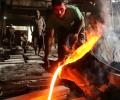
South India's manufacturing, construction, and services sectors are grappling with severe labour shortages, prompting employers to offer attractive incentives like free air tickets and salary increments to lure migrant workers back from their home states after recent assembly elections.

'Exploration should be made easier and companies should be given operational flexibility.'

Matthew Hayden cautions young cricketers against blindly copying Vaibhav Sooryavanshi's fearless batting style, backs Shubman Gill's consistency, and raises concerns over the future of bilateral ODI cricket amid the franchise boom.

'We are profoundly energy-dependent on the Gulf. That dependency must now be redirected towards the United States, because we require American permission to procure oil.' 'We additionally require Iranian permission to acquire oil from that source. So India now has to seek two separate permissions merely to secure its energy supply.' 'Should we be compelled to source from America, or from Venezuela -- which is, in effect, American-controlled supply -- that will inevitably carry a price premium, an elevated shipping cost, and a considerably extended delivery timeline, given the distances involved.'

The population is gripped by anxiety against arbitrariness and the cruelty of a state that sells its actions as minimum government, asserts Aakar Patel.

Madhya Pradesh Chief Minister Mohan Yadav and Union minister Jyotiraditya Scindia on Sunday laid the foundation stone for a defence manufacturing plant in Shivpuri district. The unit, comprising a missile complex, a composite propellant complex and a TNT complex, is being set up by Adani Defence and Aerospace, a subsidiary of the Adani Group, at a cost of about Rs 2,500 crore, said officials.
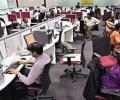
India's services sector growth reached a five-month high in April, with the HSBC India Services PMI Business Activity Index rising to 58.8, primarily driven by robust domestic demand and a shift from international to local suppliers amidst the West Asia crisis.

Why would a country that requires close to $90 billion in net foreign capital annually to create jobs, build productive capacity, and sustain rapid growth permit $30 billion of capital to flow abroad, thereby contributing to pressure on the rupee? asks Debashis Basu.
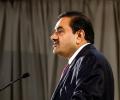
Gautam Adani, chairman of Adani group, emphasised that energy and intelligence are inseparable national priorities, asserting that India must build its own capabilities in these sectors rather than relying on external sources, especially in the context of global conflicts and shifting supply chains.

India's men's volleyball team achieved an unbeaten run to the AVC Men's Volleyball Cup semi-finals, propelling them to World No. 42. Head coach Dragan Mihailovic attributes this success to discipline and a structured system but stresses the need for consistent international exposure, longer national camps, and a robust development pathway to sustain and build upon this momentum, especially amidst administrative uncertainty in Indian volleyball.

'People told me to go back to school and leave climate issues to adults. But if adults had done their job, I wouldn't be here protesting.' At just 14, climate activist Licypriya Kangujam says children are paying the price for a crisis they did not create, while governments continue to make promises without delivering meaningful change.

The Trinamool Congress (TMC) is facing a severe leadership crisis as former minister Jyoti Priya Mallick resigned from all party organisational posts citing health, and senior North Bengal leader Goutam Deb stepped down as mayor of Siliguri Municipal Corporation, amidst widespread internal rifts and electoral setbacks.

The Indian government is considering additional relief packages for vulnerable sectors like MSMEs to mitigate the impact of the ongoing West Asia crisis on the economy and inflation.
